Data Log Analysis
Many BWMS issues can be diagnosed remotely. Send us your data logs and we'll find the problem - often without anyone stepping aboard.
Your BWMS tells its own story
Every ballast water management system generates operational data: flow rates, pressures, temperatures, valve positions, treatment doses, and sensor readings. This data tells us exactly what the system is doing and where things go wrong, and by reading that story we can often pinpoint the root cause without ever stepping aboard your vessel.
Commissioning run · sample log
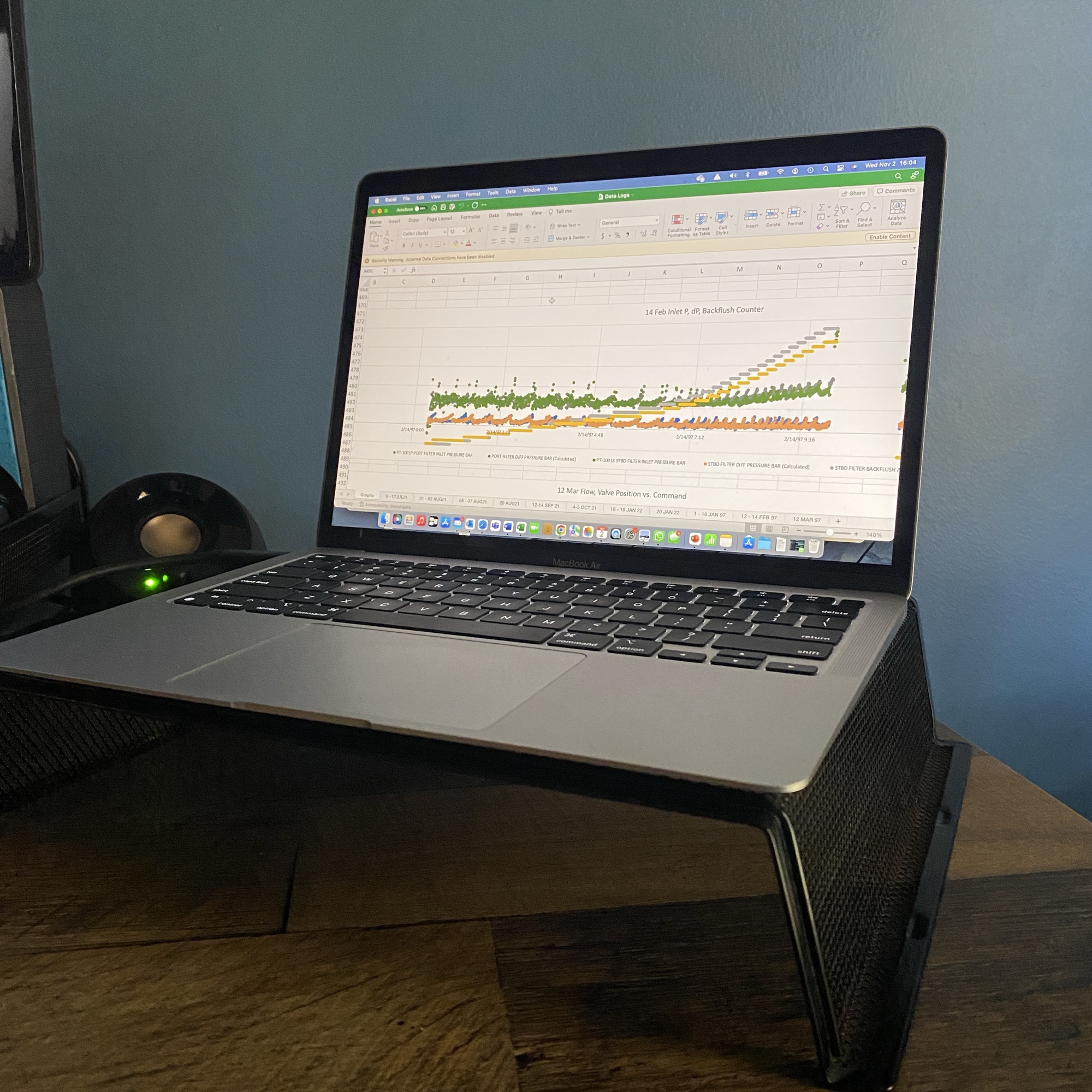
What a single set of logs reveals
Compare logs with the system's approved operating limits, check start-up and shutdown behavior, review all alarms and bypasses against the Record Book, look for drifting or flatlined sensors, and trend the same parameters across operations and water conditions. One data upload gives us a clear diagnostic picture:
- Spot flow restrictions, sensor drift, and treatment failures.
- Pinpoint exactly when and why a problem started.
- Determine if failures stem from operator error, bad installation, or design flaws.
- With AIS tracking, map where water quality challenges your system and plan contingency measures.
- Improve efficiency and reduce your environmental impact.
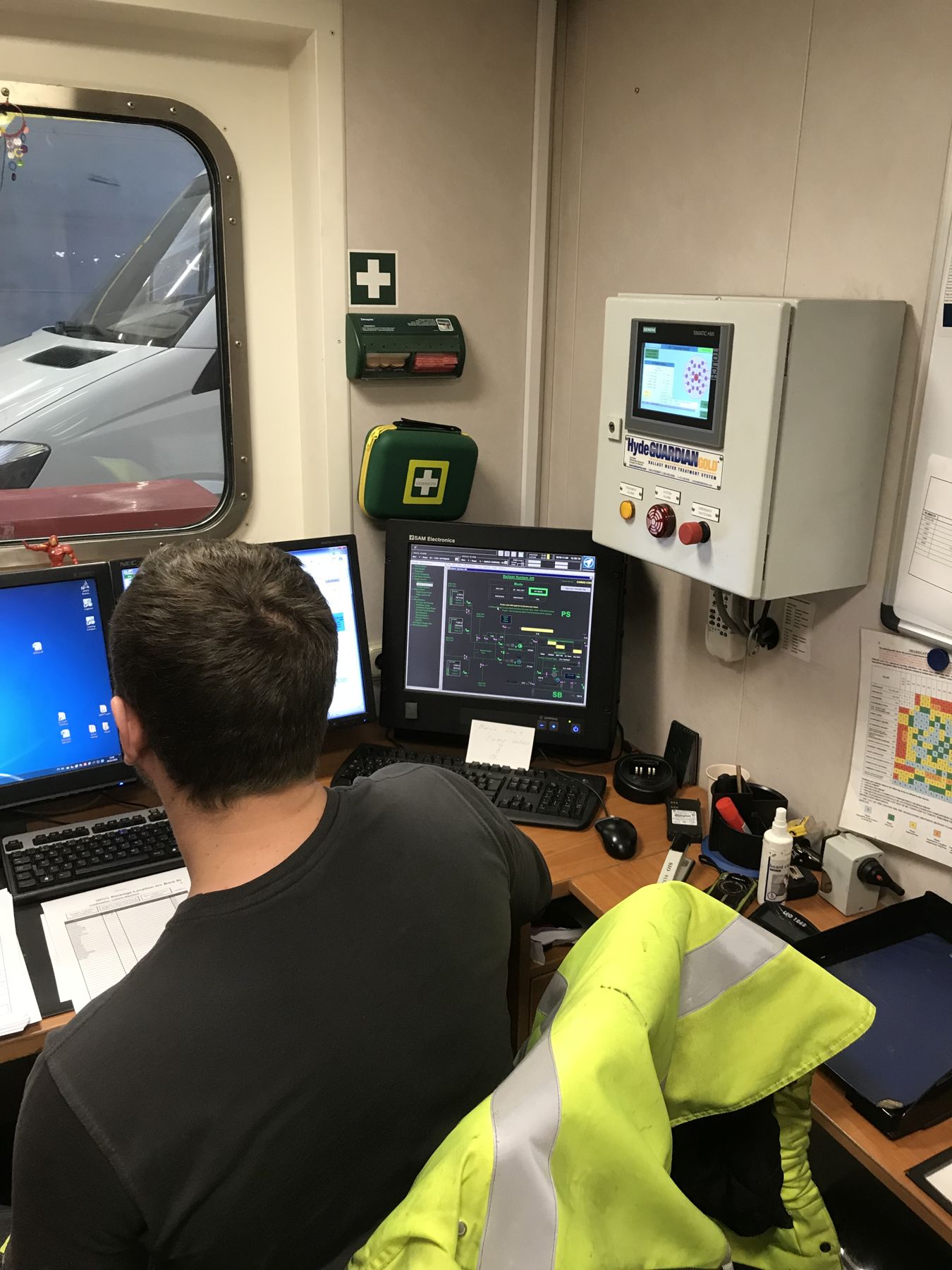
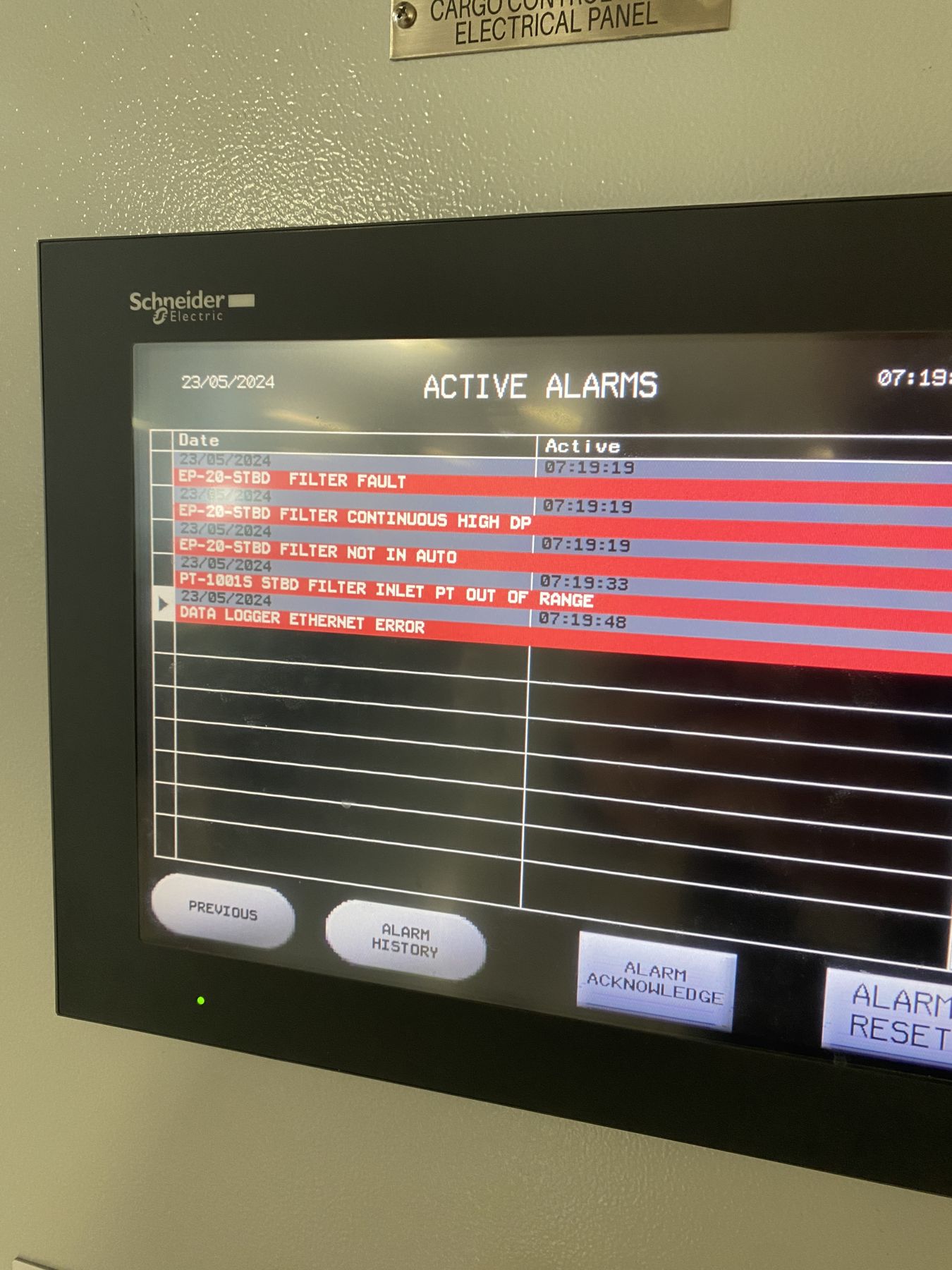
Diagnosing blind
Guessing at root causes means slower answers, higher costs, and the same faults coming back.
- Guessing at root causes
- Expensive site visits with no clear scope
- Recurring issues that never get resolved
- No evidence for manufacturer warranty claims
- Challenging water with no contingency
Data-driven answers
Data log analysis is a fast, low-cost way to diagnose a BWMS. We deliver a diagnosis within days, and when an on-site visit is needed, we arrive already knowing what to fix.
- Exact root cause identification
- Fast, targeted site visits (only when necessary)
- Permanent fixes for recurring problems
- Hard data to back up manufacturer warranty claims
- Pre-emptive planning for challenging water
Free demonstration available
Not sure if data log analysis can help with your situation? We offer a free demonstration using your own data. Send us a sample data log and we'll show you what we can find.
Request a Free DemoFrequently Asked Questions
The IMO Ballast Water Management Convention mandates that every ship must keep a Ballast Water Record Book (Regulation B-2) and record each ballast water operation in it. The form of the book is set out in Appendix II of the Convention, which was recently updated in February of 2025.
The main requirements are:
- Entries must be made promptly for each ballast operation, including discharge, treatment, exemptions, accidental discharges and operations in challenging water quality conditions.
- Each entry is signed by the officer in charge of the operation, and each completed page is signed by the master.
- The book must stay on board for at least two years after the last entry, then be kept under the company's control for at least three more years.
- Failures and bypasses of the BWMS, and the corrective action taken, must be recorded.
Electronic record books are allowed, but under amendments effective 1 October 2025 they must be approved to IMO's guidelines and the ship must carry a declaration confirming this. Port state control may ask for a verified copy or hard copy if the electronic version cannot be shown.
IMO guidance on record keeping and reporting (BWM.2/Circ.80/Rev.1) explains how to make entries. Some port states also require a ballast water reporting form before arrival. Always check your flag and the port states you visit for additional requirements.
Data log analysis is a critical part of the preventative maintenance of a BWMS because it lets you see individual components that are wearing out weeks before failure, so you can fix it on your own schedule instead of in the middle of a ballast operation or a compliance test.
Your BWMS likely records the flow, pressure, temperature, valve positions, dosing and neutralizing levels, and other key sensor readings. Trends in that data reveal early warning signs that a single alarm would never show:
- UV intensity falling or lamp power rising pointing to aging lamps or fouled sleeves.
- Cell current or voltage drifting in electrochlorination systems pointing to scaling or electrode wear.
- Filter differential pressure climbing faster than usual or backflush cycles getting more frequent pointing to the need for a deep cleaning of the element.
- Sensor readings that drift, flatline or stop agreeing with each other.
- Valve timing or pump flow changes that suggest mechanical wear.
Using these trends turns maintenance from calendar-based to condition-based. Consumables are replaced when they need to be, not too late or too early, and the data also gives you evidence for warranty claims and a record that the system has been maintained.
Because the logs are already on the system, much of this analysis can be done remotely. We offer a free demonstration using your own data. Contact Simplify Ballast or just submit your data log using our submission tool for a free no-risk evaluation of the data.
Request Data Analysis
Send us your data logs or tell us about the issue, and we'll find the root cause.